
Origin Profile
Ethiopia
The birthplace of coffee. A land of 1,000+ indigenous varieties, extraordinary floral aromatics, and cup profiles found nowhere else on earth.
Annual Production
7.35M bags
Max Elevation
4,550m
Harvest Season
Nov - Feb
Avg Farm Size
< 1 ha
Varieties
1,000+ indigenous
Key Regions
Yirgacheffe, Sidama
Geography
Ethiopia is a landlocked nation in the Horn of Africa, bordered by Eritrea, Sudan, Kenya, and Somalia. The region is mountainous with five distinct geographic zones: western highlands and lowlands, eastern highlands and lowlands, and the Rift Valley. The western highlands are the most rugged and extensive, containing Ethiopia's highest point, Mount Ras Dejen, as well as the Blue Nile river and Lake Tana. Coffee is grown across multiple elevation bands, from 1,500m to above 2,200m in the highest zones, producing extraordinary flavor diversity across the country.
The Birthplace of Coffee
Coffee is indigenous to Ethiopia. The wild coffea arabica plant originated in the forests of the southwestern highlands, and Ethiopia remains the only place in the world where coffee grows wild in its natural habitat. The country is home to between 1,000 and 10,000 distinct indigenous varieties — a genetic diversity that represents an irreplaceable global resource for the future of specialty coffee.
The legendary origin story traces to the Kaffa region, where a goat herder named Kaldi noticed his animals became unusually energetic after eating the red berries of a wild plant. Monks at a nearby monastery are said to have made a drink from the berries to stay alert during long evening prayers. Whether legend or history, Ethiopia's relationship with coffee spans over a millennium.
Growing Regions
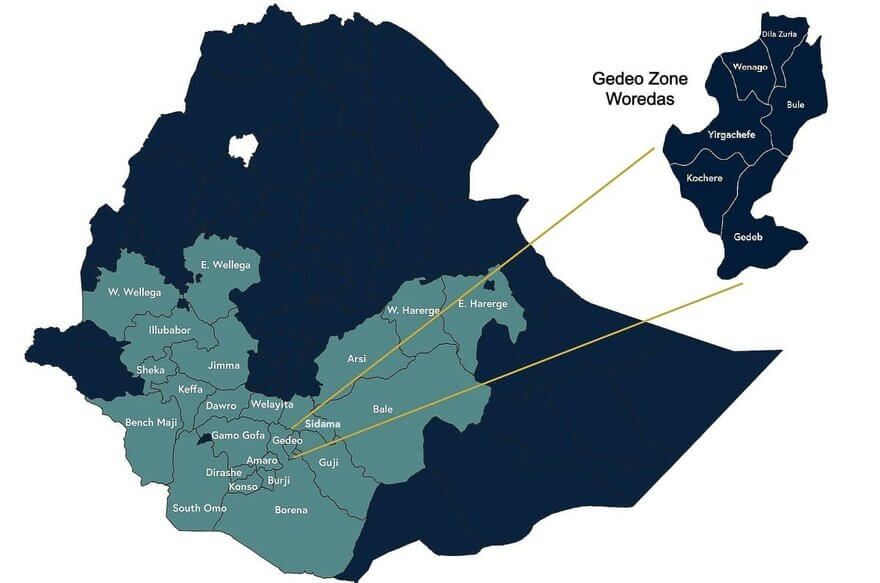
Yirgacheffe is the most internationally celebrated Ethiopian growing region, producing some of the most complex and floral coffees in the world. Located within the Sidama zone, Yirgacheffe coffees are prized for their jasmine, bergamot, and lemon notes in washed lots, and intense blueberry and tropical fruit in naturals.
Sidama surrounds and includes Yirgacheffe, producing bright, clean coffees with citrus and stone fruit characteristics. The Sidama Coffee Farmers Cooperative Union (SCFCU) is one of the most important cooperative structures in Ethiopian coffee.
Harrar in the eastern highlands produces bold, wine-like naturals with distinctive blueberry and mocha notes. One of the oldest coffee-growing regions in the world, Harrar coffees are dry-processed using methods unchanged for centuries.
Jimma and Limu in the western highlands produce washed coffees with good body and gentle acidity, often used as quality base components in blends.
Processing & Washing Stations
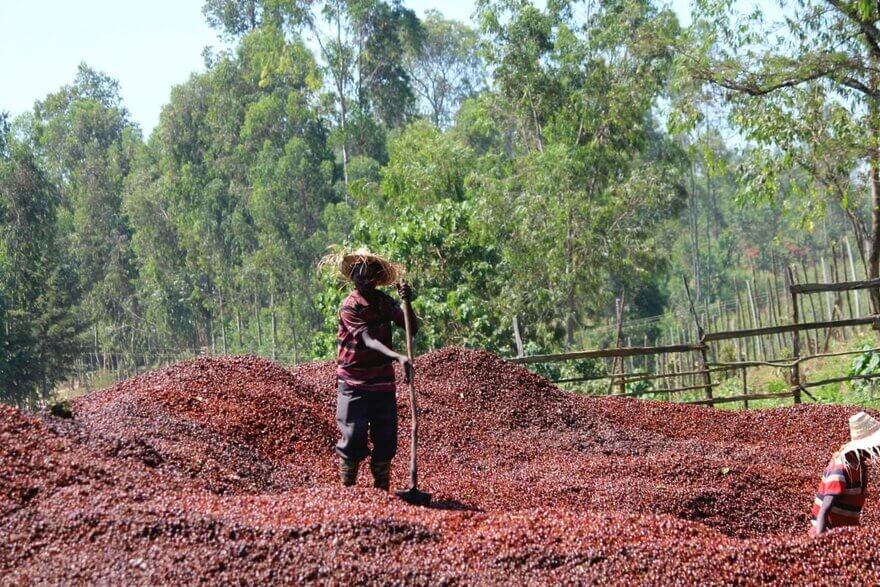
Most Ethiopian smallholder farmers deliver their ripe cherry to centralized washing stations or dry processing stations, where coffee is processed in large batches that combine cherry from many farms. This communal model means most Ethiopian coffees are traceable to the washing station or cooperative rather than an individual farm. The processing method — washed or natural — has an enormous impact on the final cup. Washed Ethiopian coffees are prized for their clarity and floral delicacy; naturals are celebrated for their intense fruit sweetness and complexity.
NextCup Coffee
Our Ethiopia
We source our Ethiopia from the Yirgacheffe region through the Konga Washing Station — a natural organic lot celebrated for its extraordinary floral aromatics and berry complexity.