
Origin Profile
Costa Rica
Where volcanic soils, strict environmental standards, and pioneering micro-mills produce some of the cleanest, most consistent coffee in the world.
Annual Production
1.3M bags
Max Elevation
1,900m
Harvest Season
Oct - Mar
Avg Farm Size
3.2 ha
Primary Varieties
Caturra, Catuai
Key Regions
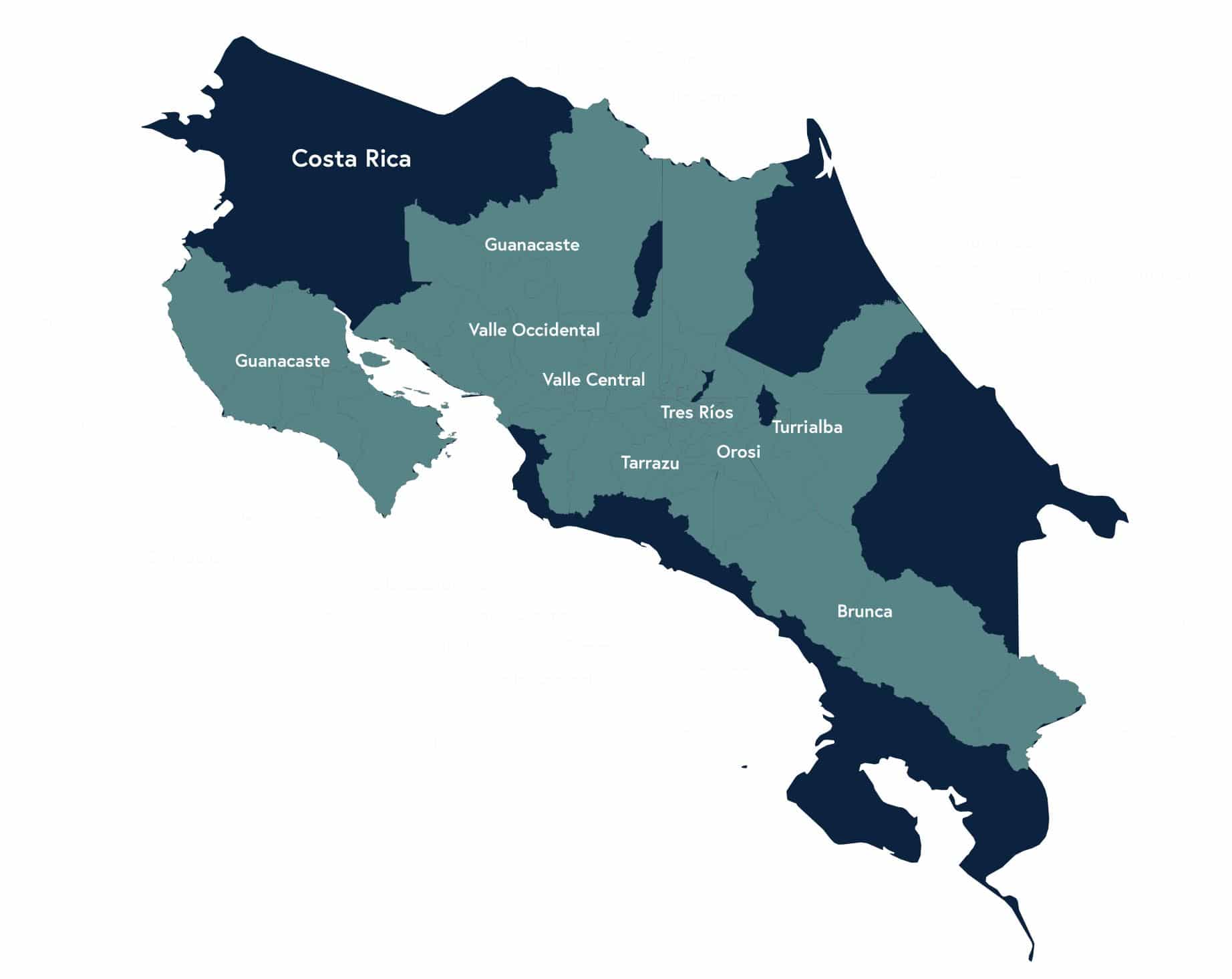
Tarrazu, West Valley
Geography
Costa Rica is bordered by Nicaragua to the North and Panama to the South, with the Caribbean Sea to the east and the Pacific Ocean to the west. Four cordilleras cross the country from northwest to southeast, creating an extraordinary range of microclimates. Active volcanoes including Irazu (3,400m) and Poas (2,700m) enrich the soil with minerals that contribute to Costa Rica's signature clean, consistent cup quality. The country's highest point, Mount Chirripu at 3,800m, sits in the Talamanca Cordillera in the south.
Climate
Costa Rica has only two seasons: a wet season from May to December and a dry season from January to April. Trade winds from the Caribbean carry moisture over the mountains, resulting in the eastern coast receiving higher precipitation. Temperature variation is driven primarily by elevation rather than latitude. Coffee plants typically flower in April and May, signaling the start of the growing cycle.
Growing Regions
Tarrazu is the most celebrated growing region, producing 40% of the country's total volume. Located southeast of the Central Valley, 95% of its coffee qualifies as Strictly Hard Bean (SHB) — grown above 1,200m where cooler temperatures create more acidity and sweetness. Seven of the top ten coffees in the 2019 Cup of Excellence were from Tarrazu.
The Central Valley is where coffee production began in Costa Rica around 1780. It produces 15% of the country's crop, mostly between 1,000 and 1,400m, yielding mild, sweet cups.
The West Valley is the largest coffee-growing region by area, producing 21% of the country's coffee across a multitude of microclimates. Average farm size is approximately 3 hectares, with primarily SHB designations and quality microlots.
Tres Rios is the smallest region but produces exceptional quality. The Irazu volcano adds minerality to the soil, creating a rich, distinctive terroir. Nearly all of its coffee is SHB-designated.
History
Coffee production in Costa Rica began in the Central Valley around 1780. After independence from Spain, the government distributed seeds and land to encourage cultivation. By 1830, coffee had surpassed cacao, sugarcane, and tobacco to become the country's largest agricultural product. The English heavily favored the clean, consistent profile introduced by the washed processing style pioneered by Don Buenaventura Espinach Gaul — a quality advantage that helped stabilize Costa Rican coffee prices through the global price crash at the end of the century.
After a 1948 revolution, new President Jose Figueres enacted reforms creating a National Bank that provided capital to small farmers and negotiated better trade agreements with Europe and the United States. These reforms democratized an industry that had been controlled by a small elite and set the stage for Costa Rica's cooperative movement.
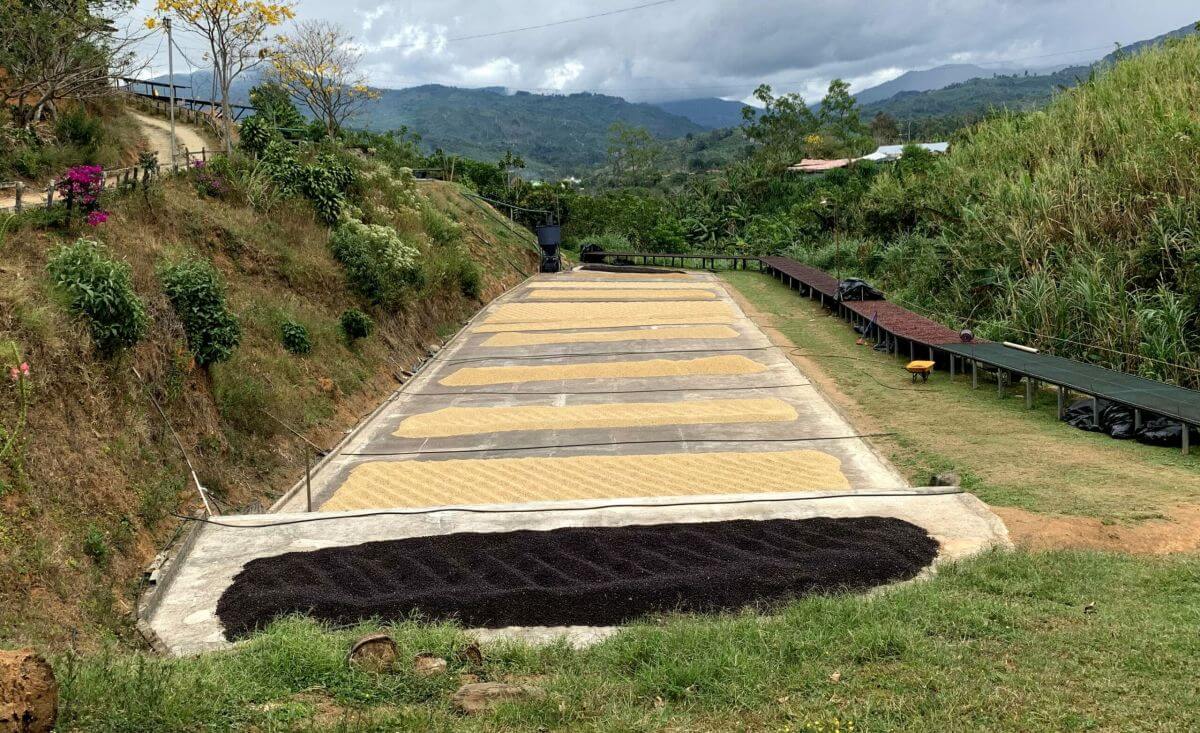
Washed coffee on the drying patio at La Candelilla micro-mill
Cooperatives & Micro-Mills
Approximately 40% of Costa Rican coffee is produced through cooperatives. Coop Dota, Coop Tarrazu, and Coop Naranjo collectively represent over 8,000 members and are among the country's largest producers. One in five Costa Ricans belongs to a cooperative of some kind.
Beginning with La Candelilla in 2000, over 150 micro-mills have opened across the country. By processing their own coffee, small farms retain more of the value chain while pioneering natural, honey, and anaerobic processing styles that produce the fruit-forward profiles increasingly sought by specialty buyers in North America and Europe.
Varieties
The primary varieties grown in Costa Rica are Caturra and Catuai. Caturra is a natural mutation of Bourbon with good cup quality and yields but susceptibility to leaf rust. Catuai was developed from a cross of Mundo Novo and Caturra. Villa Sarchi and Villa Lobos are indigenous to Costa Rica — Villa Sarchi descends from Bourbon, Villa Lobos from Typica. Increasingly, farms producing high-end micro-lots are planting Gesha and Kenya SL varieties, with six of the top ten coffees in the 2019 Cup of Excellence being Gesha.
NextCup Coffee
Our Costa Rica
We source our Costa Rica from the Tarrazu region, working directly with small farms and cooperatives committed to quality and environmental stewardship.