
Origin Profile
Colombia
The world's most recognized coffee origin. Three Andean cordilleras, two harvest seasons, and a cooperative system that changed what direct trade could mean for smallholder farmers.
Annual Production
13.5M bags
Max Elevation
5,750m
Harvest Season
Mar - Jun
Avg Farm Size
2 ha
Primary Varieties
Castillo, Caturra
Key Regions
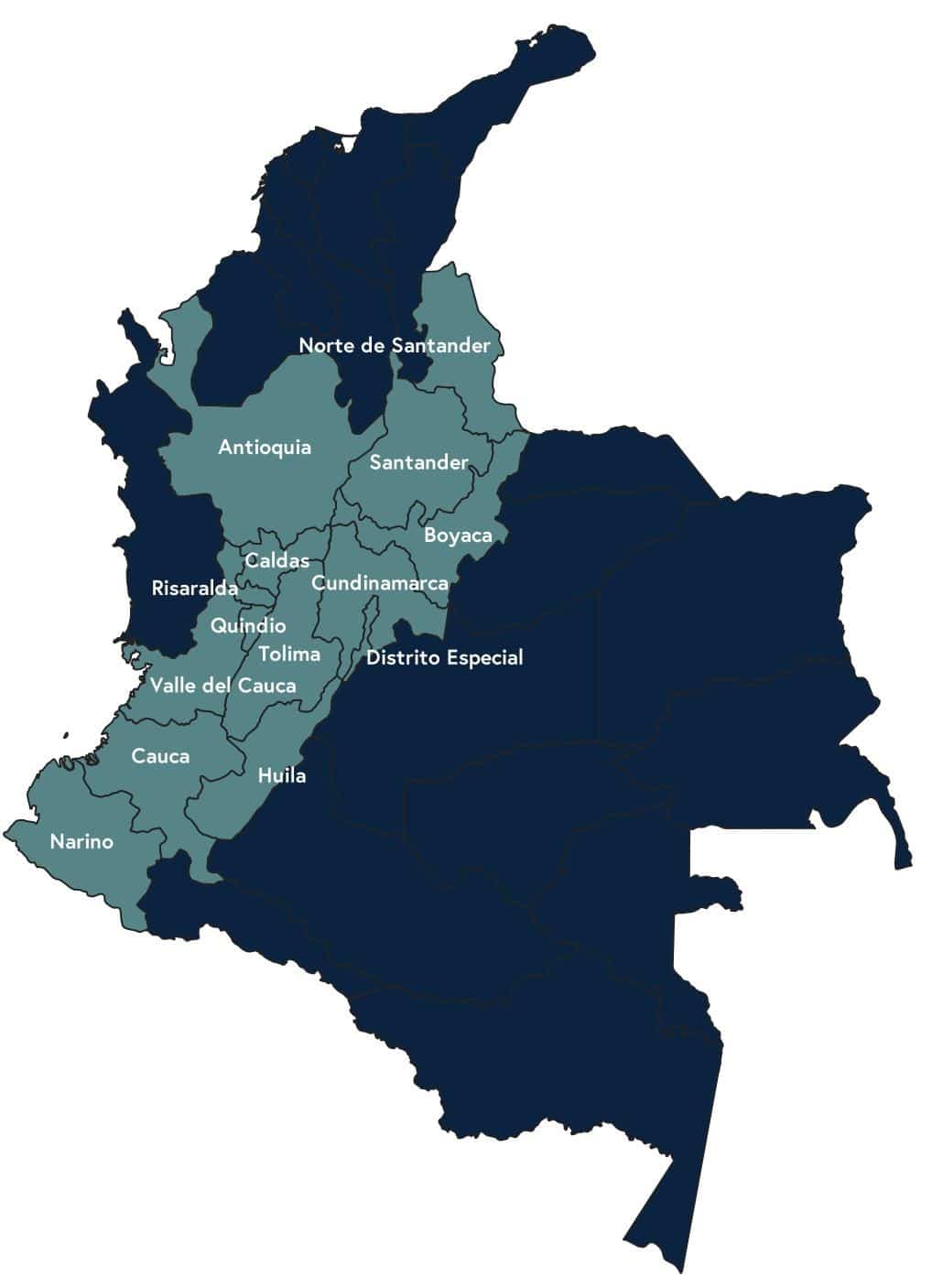
Huila, Narino, Cauca
Geography
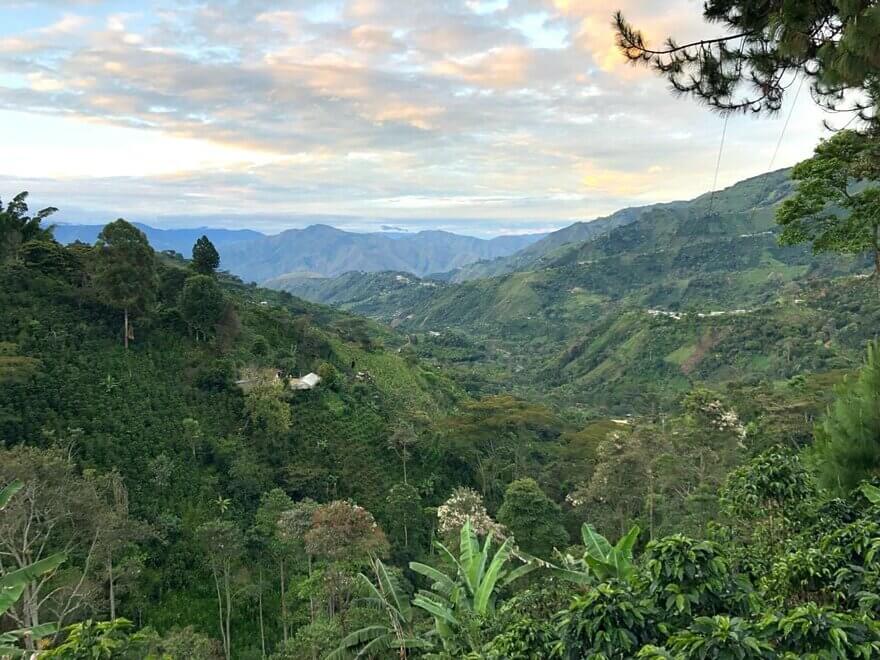
Colombia occupies the northwest corner of South America and is the only country on the continent with coastlines on both the Pacific Ocean and the Caribbean Sea. The Andes Mountains run northeast from Narino to Norte de Santander, splitting into three distinct chains: the Occidental, Central, and Oriental cordilleras. Most of Colombia's population — and virtually all of its coffee — grows on the slopes and in the valleys between these mountains. The diversity of elevations, aspects, and microclimates across the three cordilleras creates an extraordinary range of terroirs, all within a single origin.
Two Harvest Seasons
Unlike most coffee-producing countries, Colombia enjoys two distinct harvest seasons per year due to its geographic position near the equator. The main harvest (cosecha principal) runs from October to February in the north and from April to June in the south. A secondary mitaca harvest occurs approximately six months later. This means fresh Colombian coffee is available year-round — a significant advantage for roasters seeking consistent supply of traceable, freshly harvested lots.
Growing Regions
Huila in the south is Colombia's most celebrated specialty region, known for coffees with bright acidity, tropical fruit, and caramel sweetness. Many of Colombia's Cup of Excellence winners come from Huila.
Narino produces some of the highest-grown coffees in Colombia, often above 2,000m. The cool temperatures and volcanic soils create intense, complex cups with vibrant fruit and floral notes.
Cauca sits between Huila and Narino and produces balanced, well-structured coffees with stone fruit and chocolate characteristics. The COSURCA cooperative, one of Colombia's most respected, operates in Cauca.
Sierra Nevada in the northeast is Colombia's oldest growing region and produces distinctive coffees at elevations up to 1,800m, with good body and mild, approachable acidity.
The Federacion Nacional de Cafeteros
The FNC (Federacion Nacional de Cafeteros de Colombia), founded in 1927, is one of the most powerful agricultural organizations in the world. It represents over 540,000 coffee-growing families, guarantees a minimum purchase price to all members, and funds research, farmer education, and rural infrastructure. The FNC created the iconic Juan Valdez brand in 1959 to market Colombian coffee globally. While the FNC's influence has been transformative, a new generation of specialty buyers works directly with smaller cooperatives and individual farms to access the extraordinary diversity of terroir that Colombia offers.
NextCup Coffee
Our Colombia
We source our Colombia from the Cauca region through the COSURCA Cooperative — a Fair Trade and Organic certified cooperative representing smallholder farmers committed to quality and sustainability.