
Origin Profile
Brazil
The world's largest coffee producer for over 150 years. Low-grown, naturally processed, and celebrated for its chocolate richness, nutty sweetness, and syrupy body.
Annual Production
59.3M bags
Harvest Season
Apr - Sep
Avg Farm Size
7.5 ha
Primary Varieties
Caturra, Catuai
Key Regions
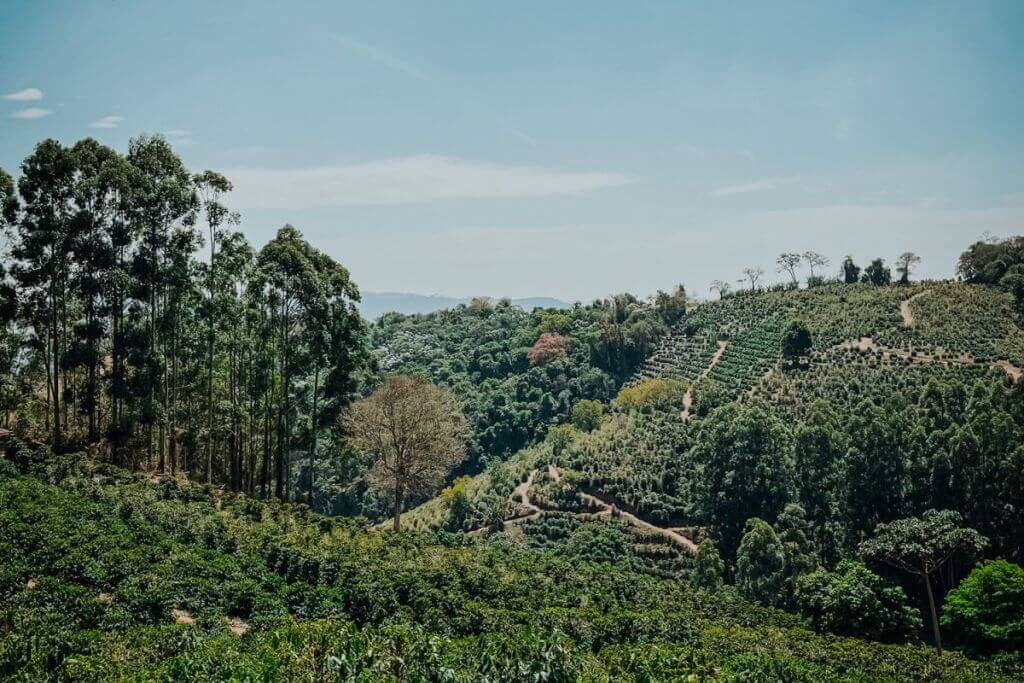
Minas Gerais, Cerrado
Export Season
Year-round
History
Brazil's coffee story begins in 1727, when Francisco de Melo Palheta smuggled seeds out of French Guiana — reportedly hidden in a bouquet of flowers given to him by the Governor's wife after he successfully settled a border dispute. From that single origin point, coffee spread across the country's vast territory.
By the mid-1800s Brazil was the world's dominant coffee producer, a position it has held ever since. The country's flat terrain, large farm sizes, and favorable climate allowed for mechanized harvesting and processing at scales impossible elsewhere. Today Brazil produces roughly 35-40% of the world's total coffee supply.
Growing Regions
Minas Gerais is by far the largest coffee-producing state, accounting for roughly 50% of Brazil's total output. Within it, Sul de Minas, the Cerrado Mineiro, and the Chapada de Minas each produce distinct profiles. Cerrado Mineiro was the first Brazilian region to receive Protected Designation of Origin status.
Sao Paulo's Mogiana region borders Minas Gerais and produces coffees with good body, low acidity, and chocolate-forward profiles — highly valued as espresso base coffees by roasters worldwide.
Bahia and Espirito Santo are growing in prominence for specialty production, with Bahia's Chapada Diamantina region producing increasingly complex, high-altitude lots that challenge conventional ideas about Brazilian coffee.
Natural Processing
Brazil is synonymous with natural (dry) processing, where the whole coffee cherry is dried intact in the sun before the fruit is removed. Brazil's reliable dry season from April to September makes this method practical and consistent at scale. Natural processing amplifies the inherent sweetness of the coffee bean, producing the chocolate, nut, and dried fruit notes that define the Brazilian cup profile. The country's flat terrain also allows for large drying patios called terreiros, where coffee is spread in thin layers and turned regularly over several weeks.
Varieties
The most widely planted varieties are Caturra, Catuai, and Mundo Novo — all high-yielding, compact varieties well-suited to Brazil's large-farm model. Bourbon and Typica are found on older estates and tend to produce more complex cup profiles. Obata is a newer rust-resistant hybrid gaining popularity. Brazil's size and agricultural research capacity make it a center for variety development, with new cultivars regularly being tested and introduced.
NextCup Coffee
Our Brazil
We source our Brazil from Fazenda Dutra in Minas Gerais — a natural-processed Red Catuai lot known for its exceptional chocolate depth, hazelnut sweetness, and clean, syrupy body.